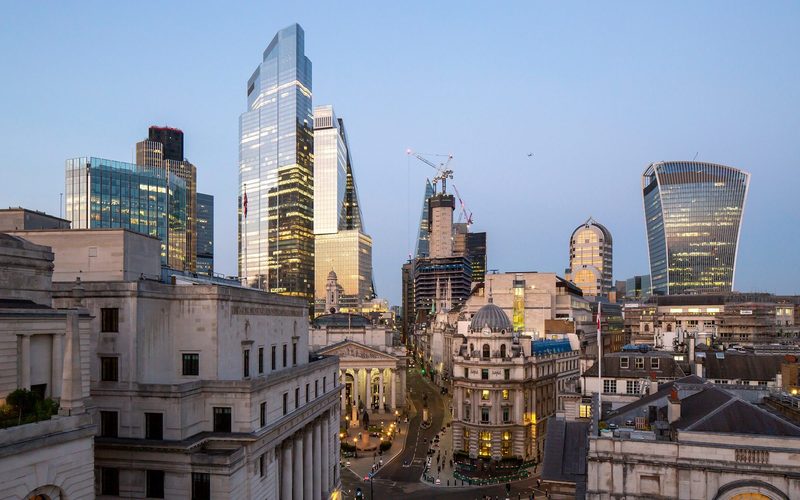
Solar on the UK's tallest BREEAM Outstanding commercial tower
A photovoltaic array on the 48th floor of a 50-storey landmark tower, with a bespoke frame engineered for high wind loads and full fire-system integration.
Bespoke systems designed for rapid return and minimal upkeep — delivered for universities, schools, leisure centres and one of London's landmark towers, with full fire-system integration and DNO (electricity network operator) approvals handled.
Real generation, saving and CO₂ figures — and the awkward parts handled: wind loading at 190 metres, fire-system integration, Network Rail liaison, nesting birds delaying a programme. Numbers you can take to your board.

A photovoltaic array on the 48th floor of a 50-storey landmark tower, with a bespoke frame engineered for high wind loads and full fire-system integration.

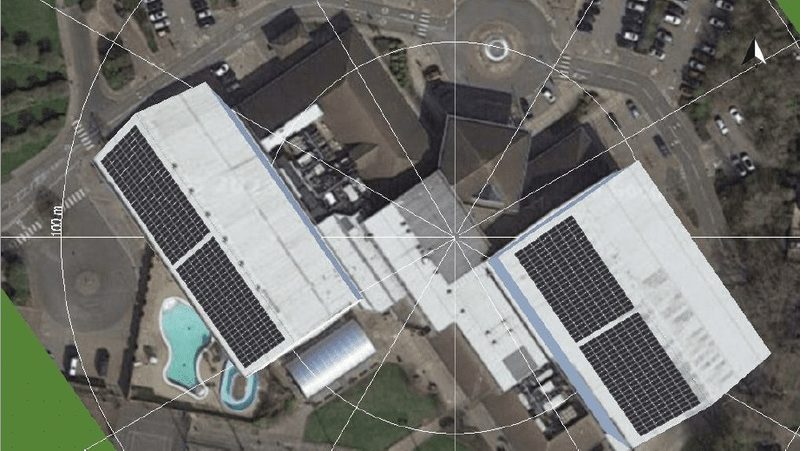
Design, supply and installation of PV across the W & T Blocks at UWE's Frenchay Campus, integrated with the buildings' fire safety systems.

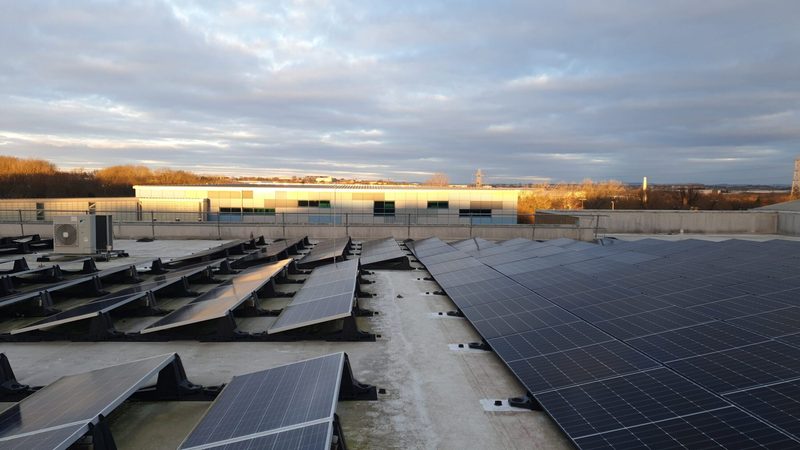
Full design and installation on a Kingspan trapezoidal roof using a Renusol mounting system, integrated with the centre's fire safety systems.
Most people arrive here already persuaded, and needing to justify it to someone else — a board, a finance director, a bursar. These are the arguments that tend to carry that meeting. We model all of them against your actual consumption in the feasibility assessment, so you get your figures rather than ours.
Commercial solar qualifies for the Annual Investment Allowance — up to £1 million of qualifying spend a year comes off your taxable profits in the year you incur it, and a 50% first-year allowance applies above that. Most rooftop systems sit comfortably inside the £1m limit.
Your accountant should confirm the treatment for your business. Solar is a special-rate asset, so it does not fall under full expensing — a common and expensive misunderstanding.
Onsite renewable generation and storage serving your own consumption is exempt from business rates until 31 March 2035 in England, with an equivalent exemption in Wales. There is nothing to apply for — the Valuation Office simply leaves it out of your rateable value.
Every unit you generate and use yourself is a unit you are not buying at the retail rate, network charges and levies included. That turns a cost which moves with the market into a fixed asset with a known life — which is often what a finance director is actually buying.
Two more that apply to some sites: onsite generation cuts the purchased-electricity emissions you report against a net-zero or sustainability target; and if you let commercial space over 1,000 m², the minimum EPC rating rises to B from 2031 where it is cost-effective to reach.
In-house design covering structural loads, bespoke framing, fire-system integration and insurance requirements — proven at 48 storeys.
DNO pre-approval, G99 grid-connection applications, warranty-preserving mounting systems and remote monitoring on every inverter.
Ten years of project design, management and financing experience — with fees agreed upfront in writing and ROI modelled before you commit.
Tell us about your site and energy spend — we'll come back with an initial view on system size, capex range, payback period and any structural or grid considerations. No obligation, fees agreed upfront in writing if you proceed.